 The Editor
Devastating Fire in Cheeka: Fodder Worth Lakhs Destroyed
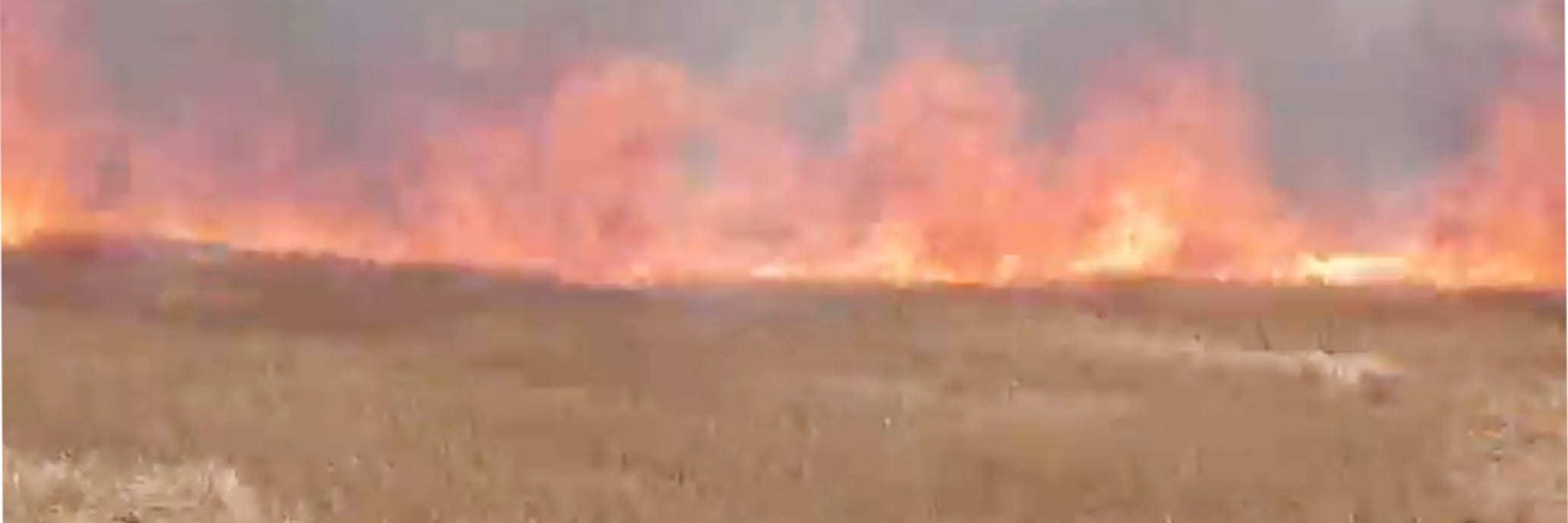
In a tragic turn of events, standing fodder crops across six villages in Cheeka were engulfed in a sudden fire, causing losses worth lakhs of rupees. Farmers were left in shock and despair as the flames spread rapidly across hundreds of acres of agricultural land.
Eyewitnesses and local residents, including Satbir Singh, Dinesh, Sudesh, Ramkumar, Darshan Singh, and Sumer Chand, reported the incident and shared their experiences with journalists who arrived at the scene.
How the Fire Began and Spread
The fire reportedly originated in the village of Theh Padhata and quickly spread to Theh Newal, Kakahedi, and nearby villages. Strong winds made the situation worse, pushing the flames through fields at an alarming rate. Though some wheat crops were affected, fodder was the primary casualty.
Due to the dry nature of fodder and high wind speeds, the fire moved fast and fiercely, even approaching homes in nearby settlements. The speed and scale of the fire left villagers panicked and helpless.
Villagers Took Charge Before Help Arrived
With no immediate help from emergency services, villagers resorted to traditional firefighting methods. Using tree branches, they attempted to control the fire manually. Meanwhile, several farmers rushed into their fields with tractors to dig firebreaks, large trenches that stop flames from advancing.
Farmers like Harvinder Singh, Jasvinder Singh, Dhanpat Rai, Gyan Singh, Chmela Ram, Harjot, and Krishan played a crucial role. They worked tirelessly to stop the fire from spreading to unaffected areas. Their quick thinking and efforts helped save many fields from complete destruction.
Firefighters Arrived Late, Say Farmers
Unfortunately, emergency services were nowhere to be found initially. Villagers claimed they made over 50 calls to police helpline 112, but none were answered. Similar complaints were made about the fire department in Cheeka, Siwan, and even Kaithal.
When help finally arrived, multiple fire trucks were dispatched, and after hours of effort, the team managed to bring the fire under control. However, the delay had already caused irreversible damage.
Local Anger Over Emergency Failures
The mood among the villagers was one of anger and disappointment. Many felt abandoned during a moment of crisis. “We tried everything on our own. If the fire brigade had arrived earlier, we could’ve saved more fodder,” said Jasvinder, a local farmer.
Their frustration wasn’t just about the fire—it was about a systemic failure. Lack of timely response, unanswered calls, and poor preparedness are issues that continue to plague rural emergency systems in Haryana.
Farmers Demand Immediate Compensation
Lakhvinder Kindra, district in-charge of Bharatiya Kisan Union, visited the affected villages and expressed deep concern over the destruction. He demanded the Haryana government immediately assess the damage and announce financial assistance for affected farmers.
“Fodder is essential for our livestock,” Kindra said. “Now that it’s gone, farmers will have to spend their own money to buy fodder. This adds to their financial burden. The government must act fast.”
Fodder Loss Means Livestock Crisis
For many farmers, the lost fodder was meant to feed their animals for months. Without it, they now face the difficult choice of purchasing fodder from markets at inflated prices, which many cannot afford.
This incident has not only caused economic hardship but also raised fears of a looming animal feed crisis in the region. For small farmers, the impact could be long-lasting, affecting both their income and food production.
What the Fire Department Says
In response to the accusations, Satpal Bakshi, in-charge of the Cheeka Fire Department, said that there were three separate fire incidents reported at the same time. He claimed that as soon as they received information about the fire near Theh Newal, they rerouted existing fire trucks from other locations.
He also denied allegations of delay, stating that the department acted as quickly as possible given the circumstances. However, many villagers remain unconvinced, citing the visible time lag between their calls and actual on-ground support.
A Wake-Up Call for Rural Emergency Services
This tragic incident has exposed major flaws in Haryana’s rural disaster response infrastructure. The lack of coordination, inadequate staffing, and poor phone responsiveness could mean the difference between safety and devastation for thousands of families.
There is now growing public pressure for the state to invest in better emergency response systems, especially in vulnerable agricultural zones like Cheeka.

A Community United in Crisis
Despite the chaos and the loss, the incident brought the community together. Villagers, regardless of land size or wealth, worked shoulder-to-shoulder to control the fire.
Such unity in moments of disaster reflects the resilience of rural India. But it also raises a bigger question—why do they always have to fight their battles alone?
Final Thoughts: A Call for Action
This fire in Cheeka was not just a natural disaster. It was also a policy failure, an administrative oversight, and a preventable tragedy. The affected farmers are now calling not just for aid, but for accountability and reform.
Will the government respond with the urgency this situation demands? Or will these farmers be left to battle their losses in silence?
The days ahead will reveal whether these cries for help were heard—or ignored.